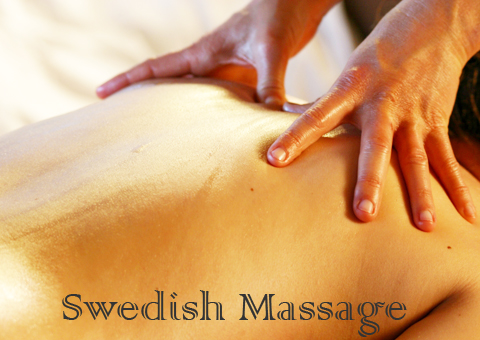
Swedish massage is the most predominant example of traditional European massage and it is the most commonly used method in the United States. It was developed by Per Henrik Ling in Sweden in the 1830s and uses a system of long gliding strokes, kneading, and friction techniques on the more superficial layers of muscles. It usually goes in the direction of blood flow toward the heart because there is an emphasis on stimulating the circulation of the blood through the soft tissues of the body. Swedish can be a relatively vigorous form of massage, sometimes with a great deal of joint movement included.
Swedish massage can :
- relax muscles,
- improve circulation without increasing heart load,
- increase range of motion,
- help the recipient obtain a feeling of connectedness, a better awareness of their body and the way they use and position it,
- relieve pain and discomfort associated with muscle tension, fractures, sprains, sciatica, and stiff joints,
- shorten recovery time from muscular strain by flushing the tissue of lactic acid, uric acid and other metabolic wastes,
- stretch the ligaments and tendons, keeping them supple,
- stimulates the skin and nervous system while at the same time relaxing the nerves themselves,
- help reduce emotional and physical stress. It is often recommended as part of a regular program for stress management.
What is a Swedish Massage?
The term "Swedish Massage" refers to a variety of techniques specifically designed to relax muscles by applying pressure to them against deeper muscles and bones, and rubbing in the same direction as the flow of blood returning to the heart.
Purpose of Swedish Massage?
The main purpose of Swedish massage is to increase the oxygen flow in the blood and release toxins from the muscles.
Swedish massage shortens recovery time from muscular strain by flushing the tissues of lactic acid, uric acid, and other metabolic wastes. It increases circulation without increasing heart load. It stretches the ligaments and tendons keeping them supple and pliable. Swedish massage also stimulates the skin and nervous system and soothes the nerves themselves at the same time. It reduces stress, both emotional and physical, and is suggested in a regular program for stress management. It also has many specific medical uses.
Swedish Massage Techniques?
Swedish massage techniques include: long strokes, kneading, friction, tapping, percussion, vibration, effleurage, and shaking motions. The usually sequence of techniques are:
1. Effleurage: Gliding strokes with the palms, thumbs and/or fingertips
2. Petrissage: Kneading movements with the hands, thumbs and/or fingers
3. Friction: Circular pressures with the palms of hands, thumbs and/or fingers
4. Vibration: Oscillatory movements that shake or vibrate the body
5. Percussion: Brisk hacking,cupping pounding
6. Passive and active movements: Bending and stretching
Benefits of Swedish Massage?
